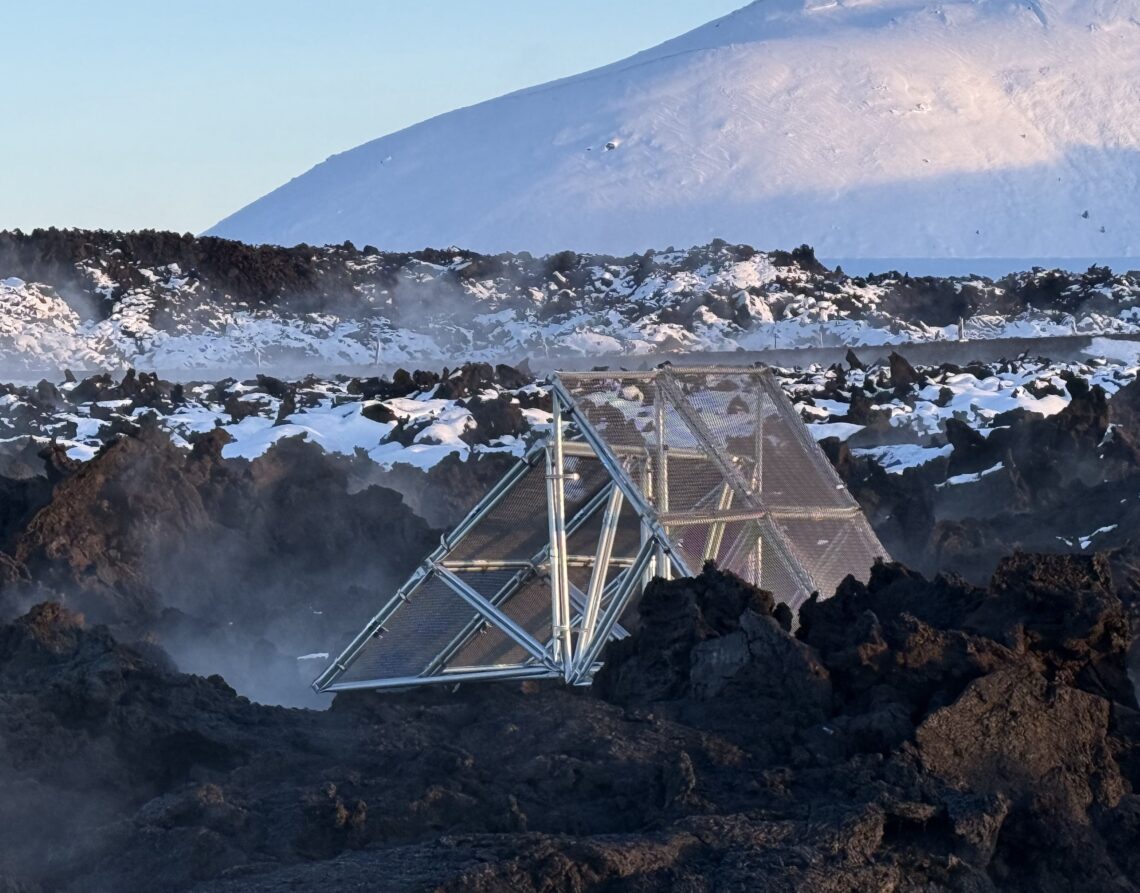
Steel structures being tested to see how well they divert volcanic lava
Skylar Tibbits / J. Roc Jih / Cristina Parreno
Researchers at MIT are looking at how steel could help to protect people, wildlife and homes from the destructive forces of molten lava.
There are over 1,350 potentially active volcanoes spread around the globe and 800 million people worldwide live within 100 km of these, according to the US Geological Survey. While eruptions are rare and fatalities now tend to be lower than those of other natural disasters, thanks largely to sophisticated early warning systems, they can still be hugely destructive and deadly. Now, professors at the Massachusetts Institute of Technology (MIT) are experimenting with steel structures that could divert the flow of lava from volcanoes away from nearby communities.
Professor J. Jih, Professor Cristina Parreño Alonso and Professor Skylar Tibbits, from MIT’s Department of Architecture at the School of Architecture and Planning, are undertaking research in southwest Iceland, an area of heavy seismic activity where a volcanic eruption is imminent. It was the news, says Jih, that Iceland had to evacuate its famous Blue Lagoon geothermal spa following a volcanic eruption, that spurred us to undertake this research. “When the volcano started erupting and threatening the Blue Lagoon, we realised that there was a real opportunity and a need for our Icelandic partners to start thinking about volcanic infrastructures,” he explains.
Supported by a Professor Amar. G. Bose Research Grant, the research aims to see how different shapes and materials interact with lava and divert it away from areas where it could be the most dangerous and destructive.
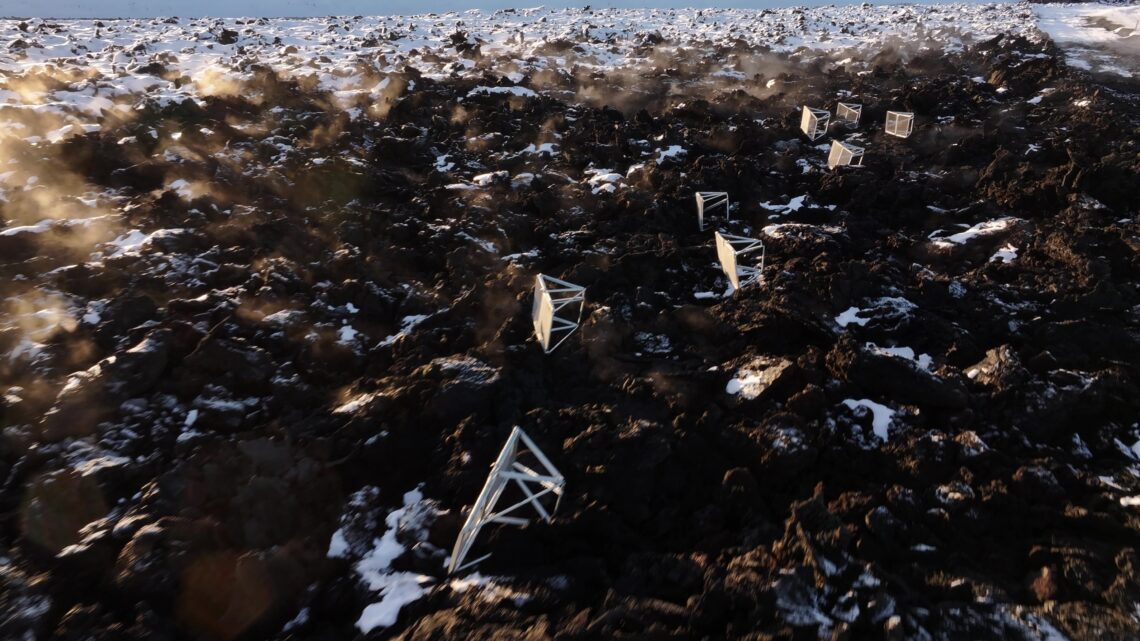
The MIT steel structures have been strategically placed close to the volcano to divert the lava
Skylar Tibbits, J. Roc Jih, Cristina Parreno
Existing lava diversions are not 100% successful
Currently, Iceland uses berms made of earth and stone to divert lava from volcanoes, but this hasn’t always proved successful, leaving residents no choice but to evacuate. “When the volcano started erupting, Iceland was building these huge berms to try to protect it, sort of like a fortification approach,” says Tibbits. “So we started thinking about how to help guide or naturally work with the force of the lava, not try to fight it, but guide it, cool it, divert it, tunnel with it and that led us to steel.”
Parreño Alonso had been working at MIT’s metallurgy forge lab melting basalt, which is solidified lava. “We went there and started testing a bunch of different materials to figure out what would withstand the high temperature of the lava and that’s where we eventually landed on steel. It could best withstand the temperature and pressure or force of the lava,” says Tibbits.
The team began experimenting with prototype structures made from steel pipe and mesh. “We had seen previously some examples where there would be a fence or some other kind of steel structure and the lava would actually divert around it or be extruded through it,” says Jih. “We hoped that steel mesh might actively help with cooling the lava as it flowed onto it, maximising the surface area and the airflow and then we opted for steel pipe because it’s cost-efficient and rapidly deployable.”
The steel structures had to be light enough to allow a fast installation and strong enough so they wouldn’t be easily damaged. After working on various designs, V-shaped structures were settled upon as they would direct lava to flow around them or could be turned into ramps or tunnels. They were first tested at the university’s metal lab and then transported in modular parts to Iceland to be built on site close to the volcano.
“We brought it over in lots and lots of suitcases and boxes and then assembled it in the field and we have left some there on a truck to be deployed when the volcano starts erupting again and we can see where the flow is going,” says Jih.
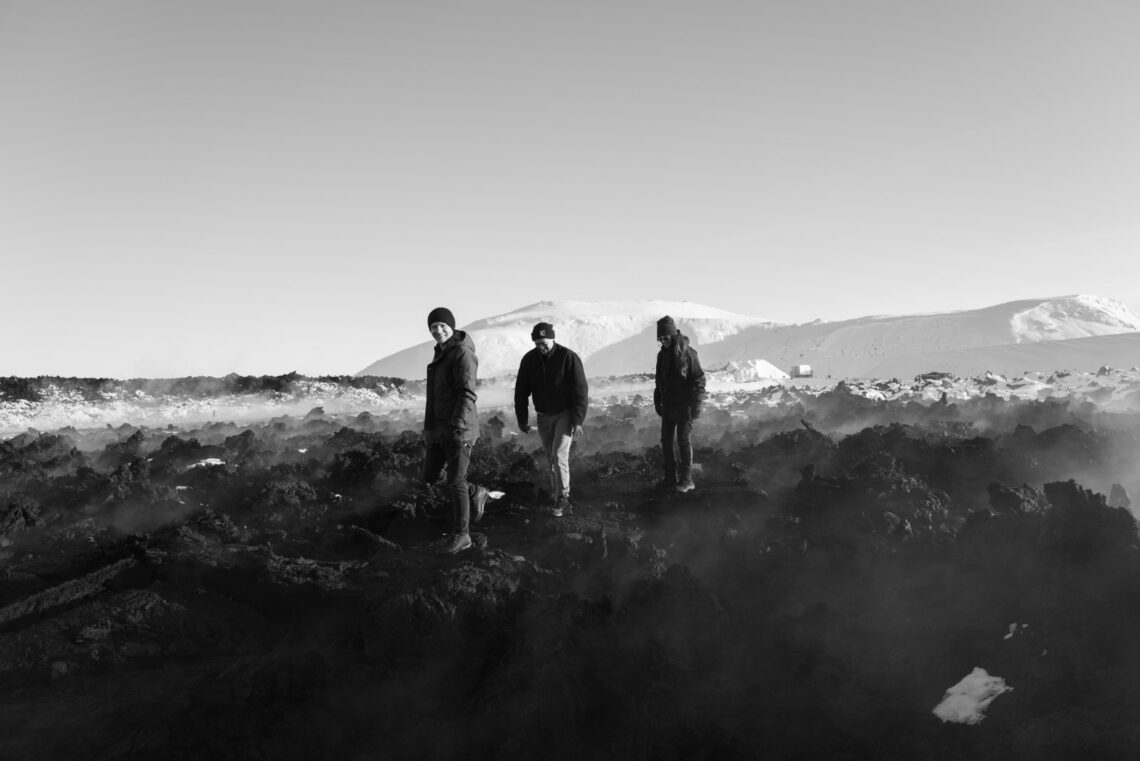
The team behind the steel lava diverting structures
Marino Thorlacius
A waiting game
They constructed several lightweight steel structures close to the volcano and placed others close to fissures that ooze lava when open. Cameras monitor these steel structures so that the research group can ascertain what happens when the lava comes into contact with them.
The only problem that the team has encountered so far, is that the volcano hasn’t erupted since the structures have been in situ. “We have a bunch of people on standby for when the volcano goes off. So all of our bags have been packed for a year now for this thing,” reveals Tibbits.
The volcano is expected to go off at any time and once the team has studied how these steel structures work to redirect the lava, they hope that these steel prototypes can be used to create lava diversion structures that will protect populations living close to volcanoes all around the world.